Garage Floor Paint vs Epoxy Coating: Why Painting a Garage Floor Fails in Florida
Every spring we get the same call from Naples homeowners: "I painted my garage floor two years ago and it is peeling where the tires sit. Can you fix it?" Yes — but first we have to grind the paint off, which is why it pays to understand the difference between painting a garage floor and installing a real epoxy coating before you spend a weekend on it.
"Garage floor paint" and "epoxy paint" are not epoxy coatings
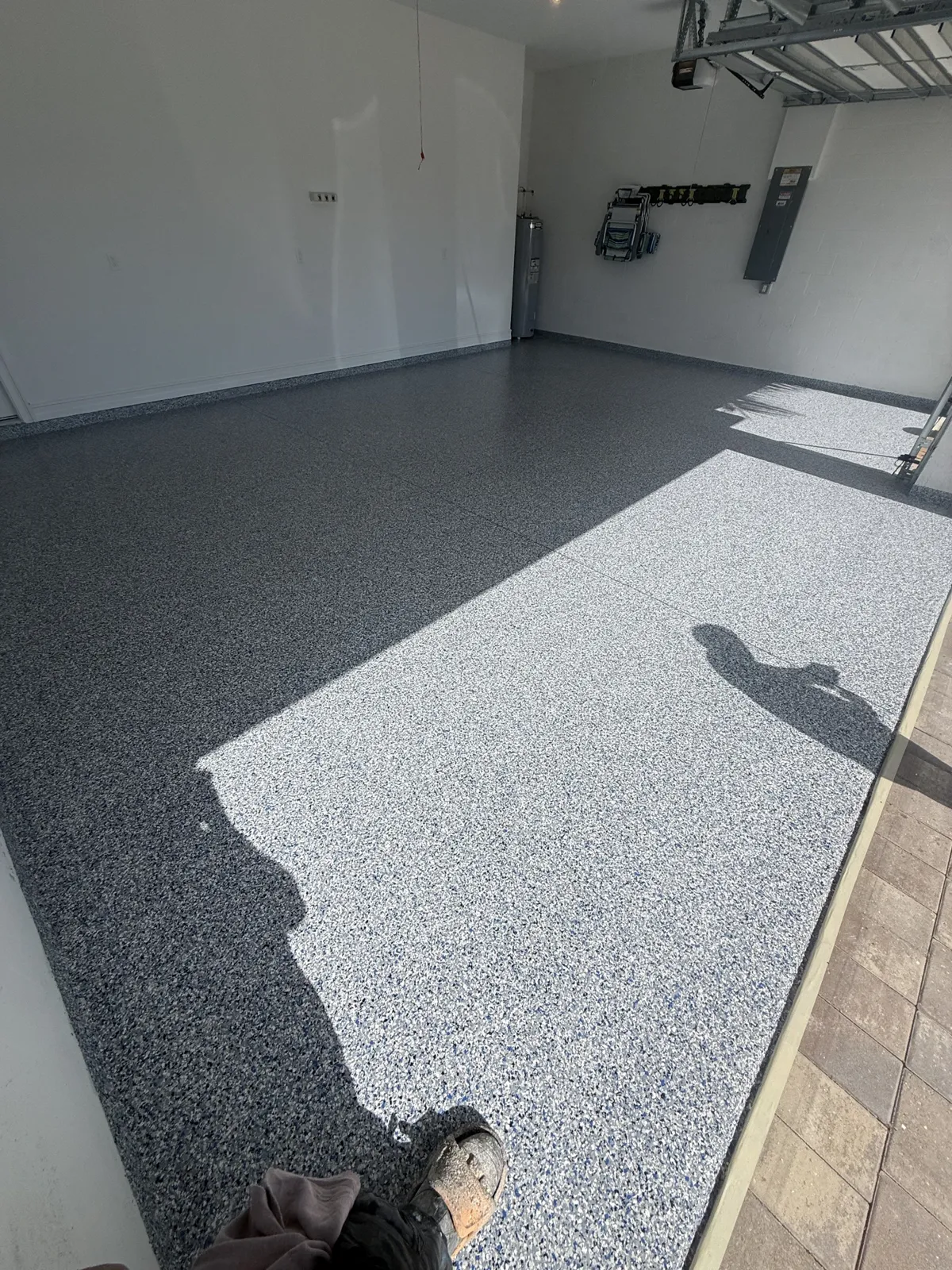
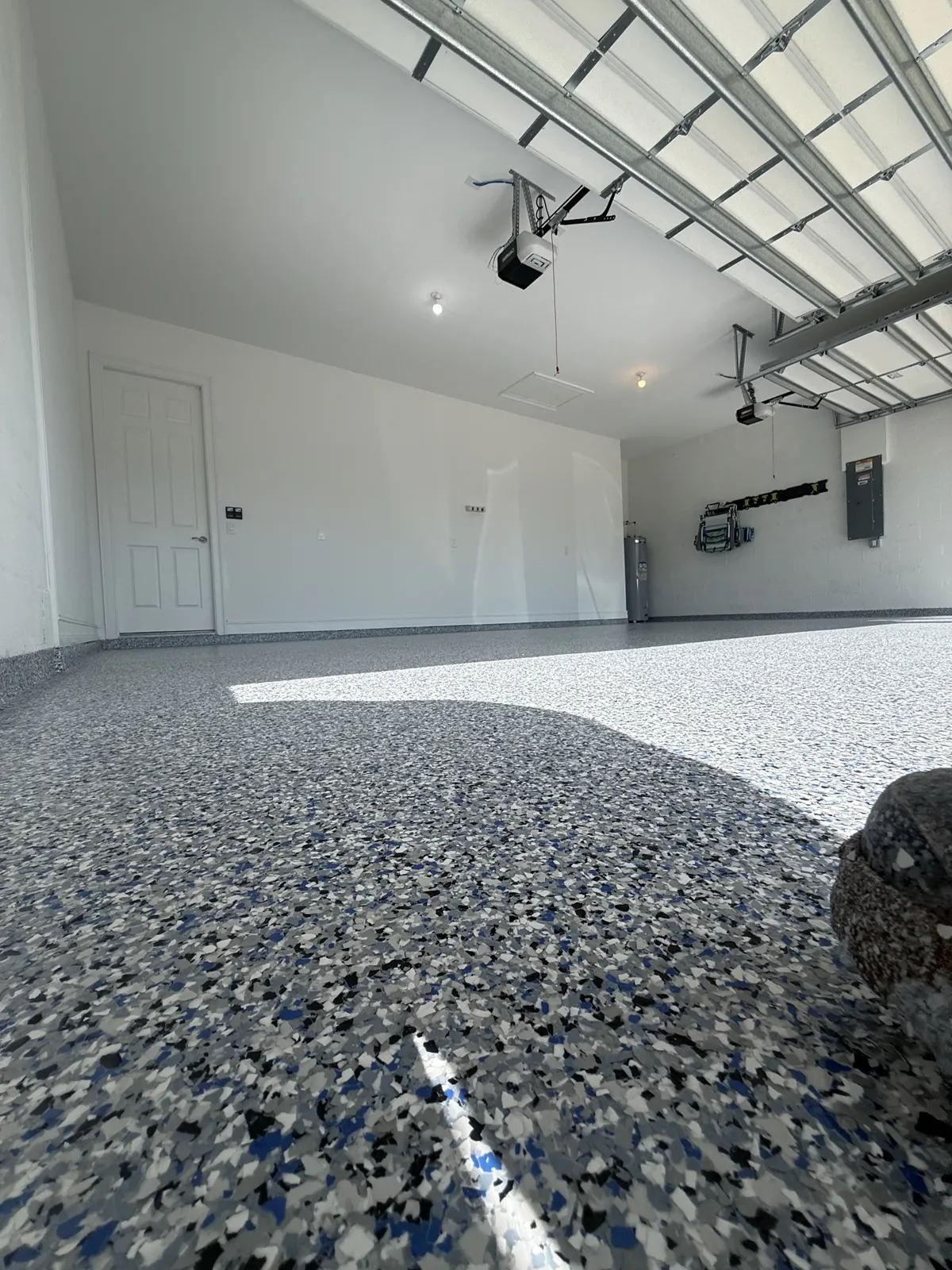
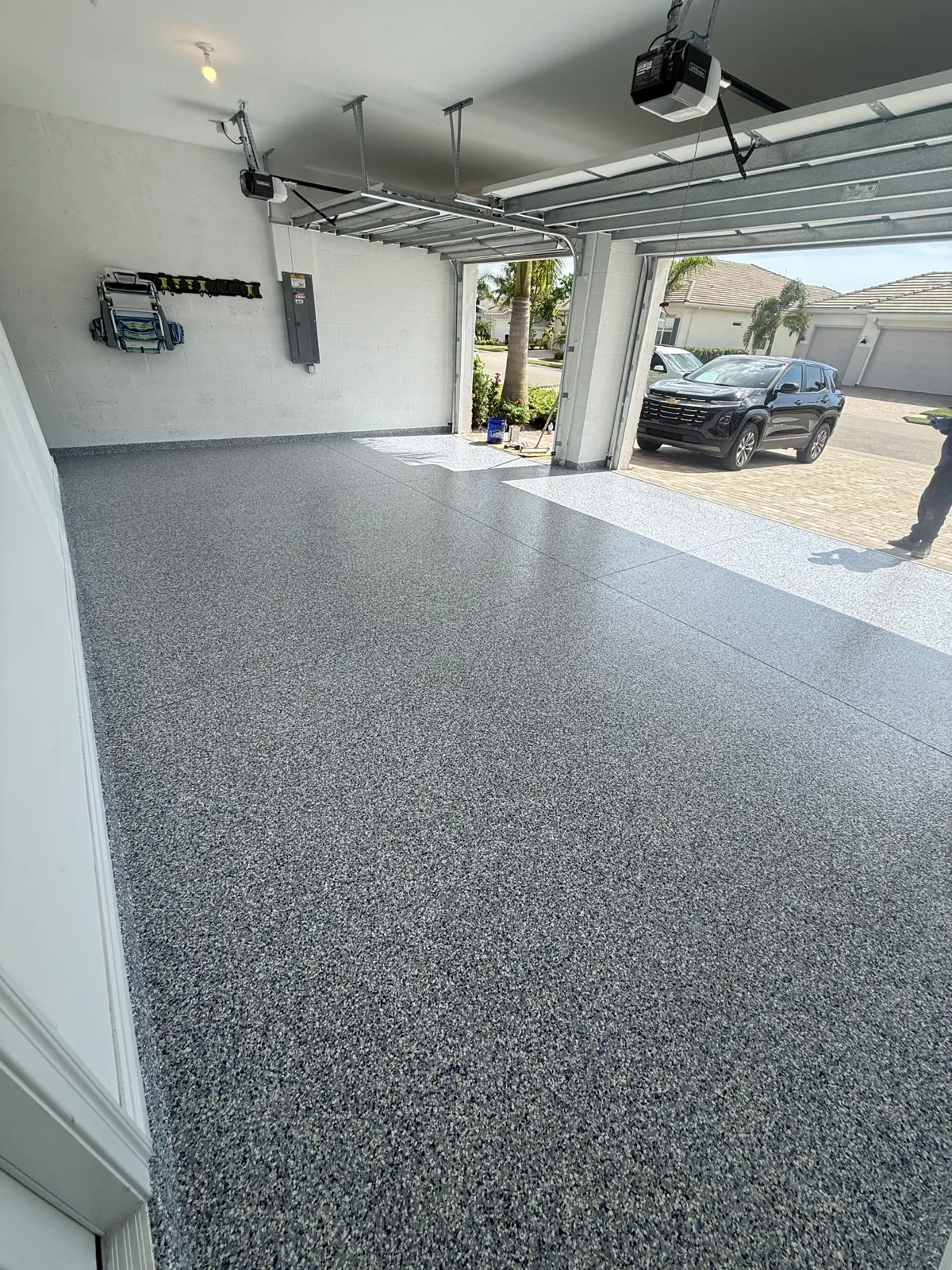
Most products sold as garage floor paint or epoxy floor paint are water-based 1-part acrylics or very thin 2-part epoxies that roll on at about 3 mils (0.003"). A professional epoxy coating is a 100% solids, two-component resin applied at 10–20 mils for the base coat alone, then sealed with a polyaspartic topcoat. The finished system is often 25–40 mils thick — ten times a coat of paint.
That thickness is not cosmetic. It is what resists hot tires, chemicals, abrasion and the moisture vapor that pushes up through every Collier County slab.
What happens to a painted garage floor in Naples
| Florida stress | Garage floor paint | Professional epoxy coating |
|---|---|---|
| Hot tires (140°F+) in August | Softens, grabs rubber, peels in the tire tracks | Polyaspartic topcoat stays hard — no hot tire pickup |
| Moisture vapor from the slab | Bubbles and delaminates in patches | MVB primer blocks vapor; 100% solids epoxy bonds into ground concrete |
| UV through the garage door | Chalks and fades | Aliphatic polyaspartic never yellows |
| Oil, brake fluid, fertilizer | Stains and softens | Wipes off the sealed surface |
| Typical lifespan | 1–3 years | 15–20+ years with a lifetime residential warranty |
The real problem: paint sits on concrete, epoxy bonds into it
Paint kits tell you to acid-etch the slab. Etching opens the surface a little, but it leaves laitance, old sealers and a weak profile — and in Florida you then wait days for the slab to dry while humidity keeps it damp. Professional installers diamond-grind to a CSP 2–3 profile, vacuum with HEPA extraction, test moisture and repair cracks before any resin goes down. The epoxy locks into the open pores of the concrete instead of lying on top of a paint film.
Cost: paint looks cheaper until the second time
- Garage floor paint / DIY epoxy kit: $700–$1,400 in materials for a 2-car garage ($1.50–$3 per sq ft), plus a weekend. Then $3–$5 per sq ft to grind it off when it fails.
- Professional epoxy coating: $2,700–$4,500 installed for a 2-car garage in Naples ($6–$10 per sq ft for our full-flake system, polyaspartic topcoat included), one day, done once.
Over ten years the painted floor is usually redone two or three times and still never looks finished. Our 2026 epoxy floor installation cost guide runs the full numbers.
When painting a garage floor does make sense
Honestly, almost never for a floor you park on. If the space is a dry storage room with no vehicles and you only need a quick color refresh for a year or two, a high-quality floor paint is acceptable. For anything with tires, humidity or sunlight, a coating is the only option that lasts.
What to do if your garage floor is already painted
Do not coat over it. Even the best epoxy is only as strong as the paint under it. We grind the paint off completely, repair the concrete and install the system from scratch — see our coating removal and surface prep service.
See the difference on your own floor
Upload a photo of your garage to our free AI Floor Visualizer and see it with a real flake or metallic epoxy system in seconds, then get your price with the cost calculator. Prefer to talk? Call (239) 276-1462 — Luis answers.
Related reading: Garage floor coating in Naples · Epoxy vs polyaspartic · Why hire professional epoxy floor installers