
Why Florida Condos Are Waterproofing Now
Florida's milestone inspection and structural reserve requirements have put balcony and walkway slabs under the microscope. Salt air, rain, and decades of foot traffic corrode embedded rebar — and once spalling starts, repair costs multiply. A properly installed waterproofing membrane is the most cost-effective way to stop water intrusion before it becomes a structural finding.
What We Protect
- Private balconies and lanais
- Open-air corridors and walkways
- Elevated pool decks and amenity terraces
- Stair landings and breezeways
Why TREMCO 350/351
- Fluid-applied — seamless, no laps or seams to fail
- Elastomeric — bridges hairline cracks as slabs move
- UV-stable wear coat with slip-resistant texture
- Manufacturer-backed system warranty available
Our Condominium Workflow
1. Site survey with the property manager
We map every balcony/walkway, document spalls, cracks, drainage issues, and failed previous coatings. Written findings for the board.
2. Concrete restoration first
Delaminated concrete removed, rebar cleaned and treated with corrosion inhibitor, sections rebuilt with repair mortar. Waterproofing only goes over sound concrete.
3. Crack & joint treatment
Moving cracks routed and sealed, expansion joints detailed with compatible sealant, door thresholds and post bases flashed.
4. TREMCO 350 base membrane
Fluid-applied polyurethane membrane at specified mil thickness, aggregate broadcast for traction.
5. TREMCO 351 wear topcoat
UV-stable traffic coat in the color approved by the association. Line striping or walkway marking available.
6. Phased handover + documentation
Section-by-section completion so residents keep access. Closeout package with product data, photos, and warranty for association records.
Typical investment: $10-20 per sq ft depending on repair scope and detailing. Multi-unit HOA projects quoted per phase.
See our full TREMCO Waterproofing pageRequest a Property Evaluation
Tell us about your building — we'll schedule a free walkthrough and prepare documentation your board can act on.
Balcony Waterproofing FAQs
Why do Florida condo balconies need waterproofing?
Balconies and elevated walkways are exposed concrete over living space. Without a waterproof membrane, rain and salt air drive moisture into the slab, corroding rebar and causing spalling — the exact structural issues Florida's milestone inspection laws now require associations to address.
What system do you use for balcony waterproofing?
We install TREMCO 350/351 — a fluid-applied polyurethane waterproofing membrane system for pedestrian traffic. Base membrane, aggregate for slip resistance, and a UV-stable wear topcoat, with full crack and joint treatment underneath.
How much does condo balcony waterproofing cost?
Waterproofing systems typically run $10-20 per sq ft depending on the condition of the slab, repair scope, and detail work (drains, posts, door thresholds, edge metal). HOA and multi-unit projects are quoted per phase with volume pricing.
Can you phase the work so residents keep access?
Yes. For walkways and multi-story buildings we work in phases — one section or stack at a time — so residents always have a safe route. We coordinate scheduling directly with the property manager.
Do you repair spalling and exposed rebar before coating?
Always. Waterproofing over damaged concrete fails. We remove delaminated concrete, treat exposed rebar with corrosion inhibitor, rebuild with repair mortar, and only then install the membrane.
Do you work with HOAs, property managers, and engineers?
Yes. We provide insurance certificates, product data sheets, warranty documentation, and coordinate with the association's engineer of record when the work is part of a milestone/SIRS remediation plan.
Related Guides From Our Blog
Expert answers from our Southwest Florida flooring team.
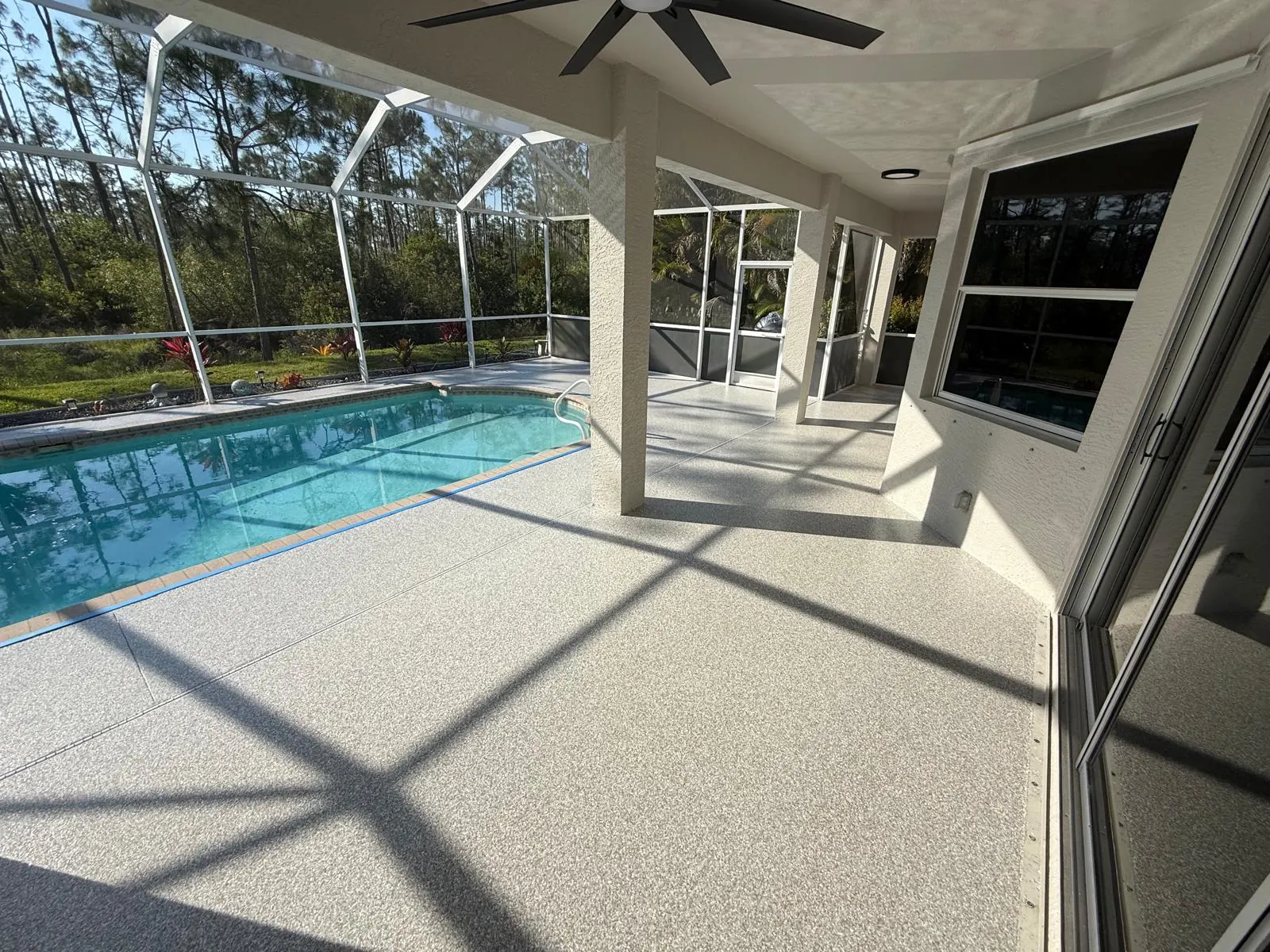
Salt Damage, Chlorine & Your Pool Deck: Protecting SWFL Outdoor Surfaces
Gulf salt air and pool chlorine are quietly destroying your Naples pool deck. Here's what's happening at the molecular level — and the epoxy system that actually resists both.
Read the guide →Best Epoxy Flooring for Florida's Humidity, Heat & Hurricanes: SWFL Climate Guide (2026)
Florida's humidity, heat cycles, salt air, and hurricane flooding destroy inferior coatings. Here's what actually survives in Naples, Marco Island, and the SWFL climate — from a local contractor who's seen it all.
Read the guide →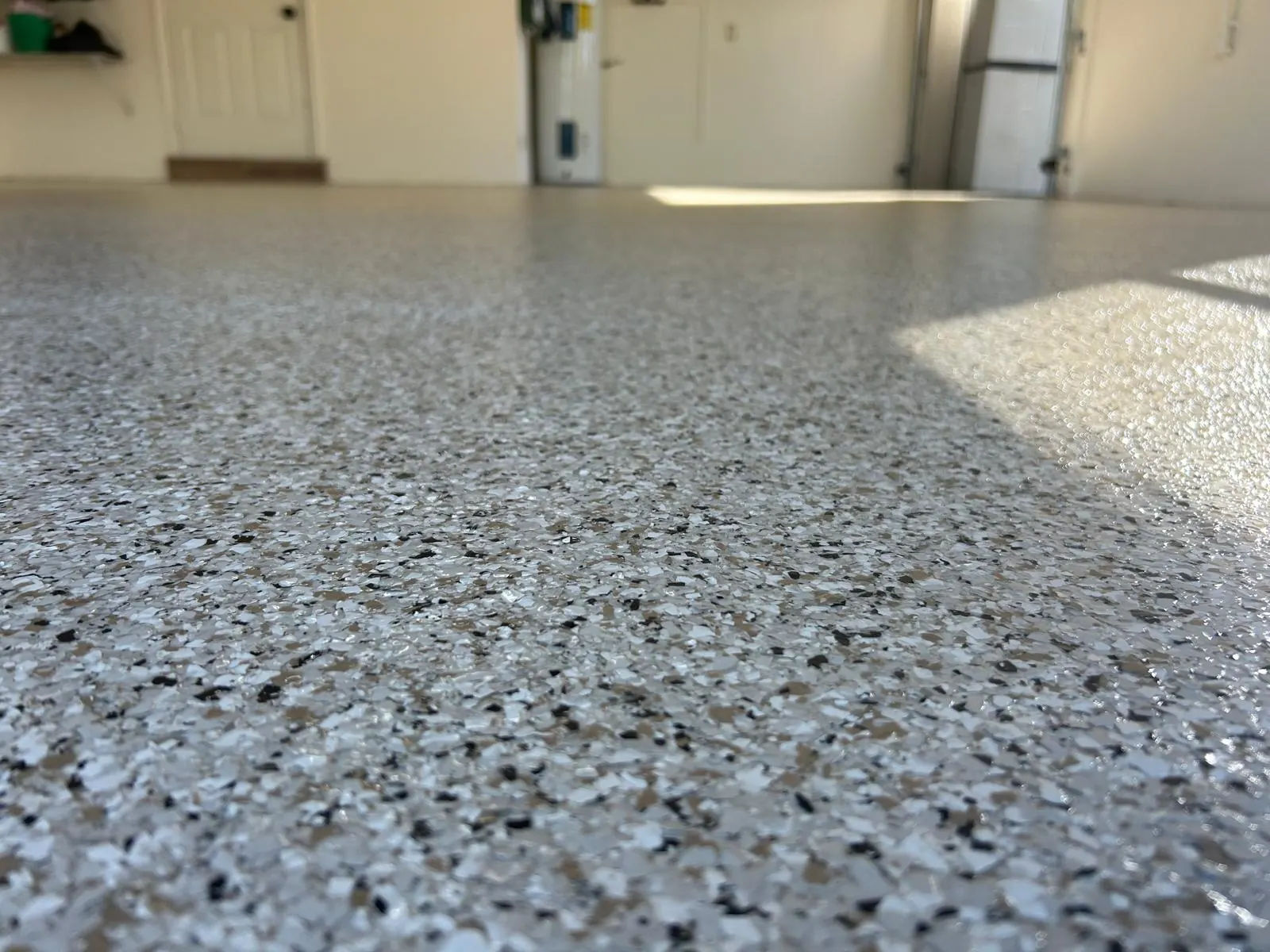
How to Prepare Your Concrete Floor for Epoxy: A Naples Pro's Checklist (And Why You Shouldn't DIY)
Concrete prep is 80% of a successful epoxy installation. Here's exactly what a licensed Naples FL contractor does before the first drop of resin hits your floor — and why DIY prep fails.
Read the guide →