Garage Floor Sealer vs Epoxy Coating: What Actually Lasts in Florida
"Should I just seal my garage floor?" is one of the most common questions we hear in Naples. Sealers are cheap, clear and fast — and for some concrete they are exactly right. For a garage floor that carries cars in Florida heat and humidity, they usually are not. Here is how garage floor sealers, clear epoxy and a full epoxy coating system really compare.
The three products people call "sealer"
1. Penetrating sealers (silane / siloxane / silicate)
Soak into the concrete and react chemically to reduce water absorption. Invisible, breathable, no film. They do nothing for appearance, stains or abrasion, and they do not stop oil. Great for driveways and pavers, limited for garages.
2. Topical acrylic sealers ("wet look")
A thin 1–3 mil film that darkens the concrete and adds sheen. Inexpensive and easy, but acrylics soften under hot tires, turn white (blush) when moisture is trapped beneath them — a constant in Collier County — and need recoating every 1–3 years.
3. Clear epoxy
Two-part epoxy without color or flake. Harder and thicker than acrylic (around 8–12 mils), but standard epoxy is not UV-stable: in a garage with glass panels or an open door it ambers within a year. It also shows every imperfection in the slab, because there is nothing to hide them.
A full epoxy coating system is a different category
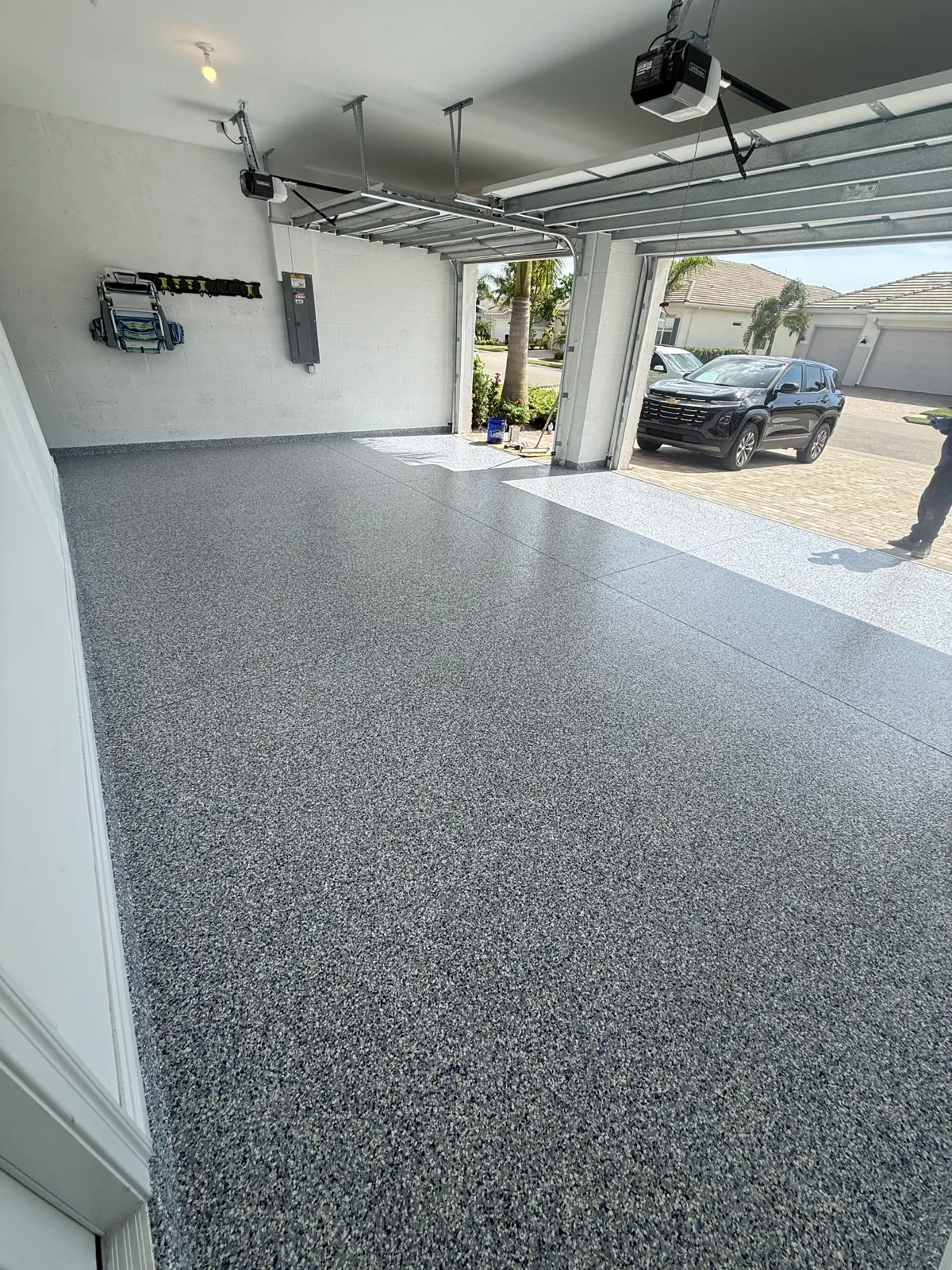
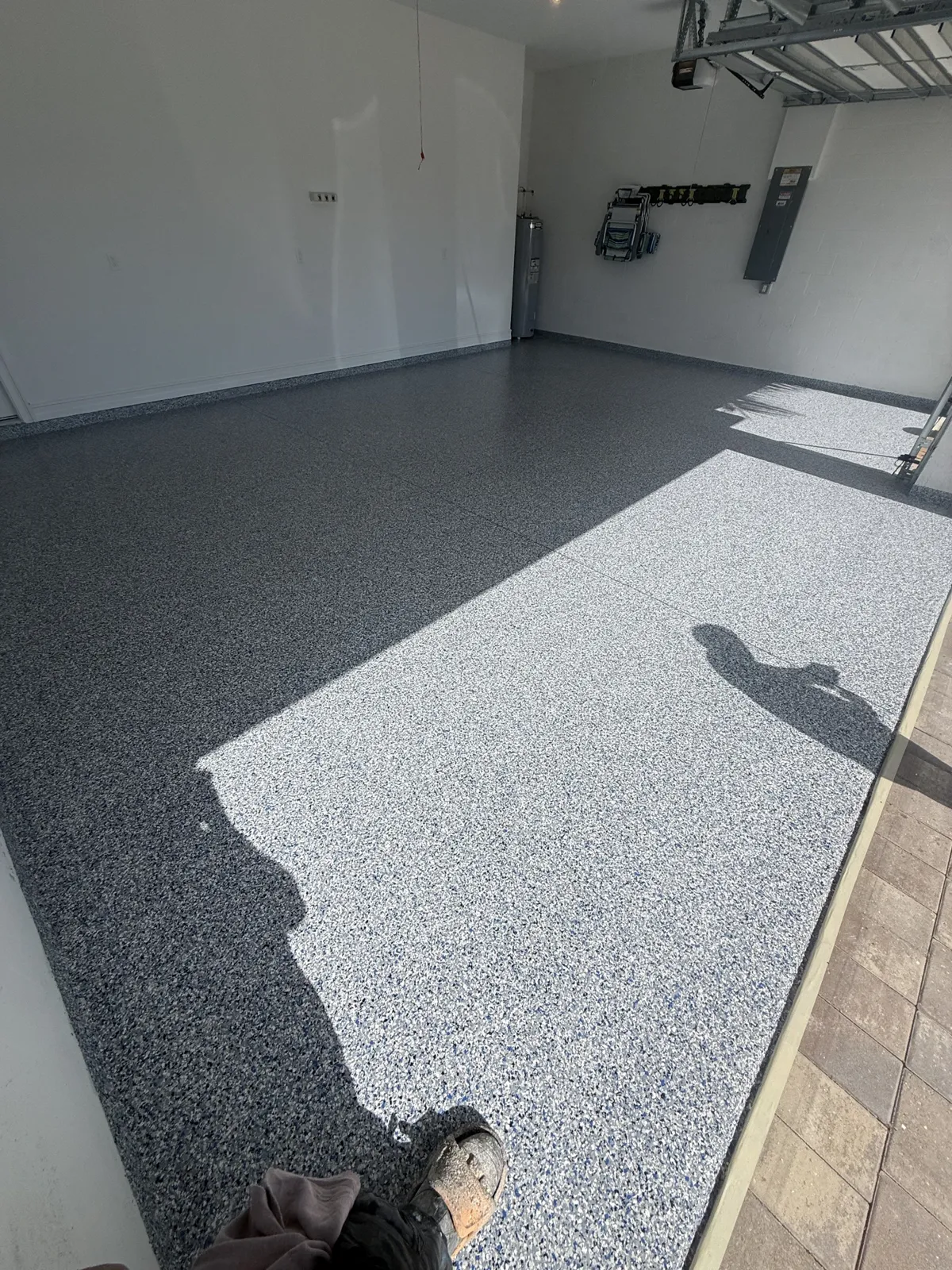
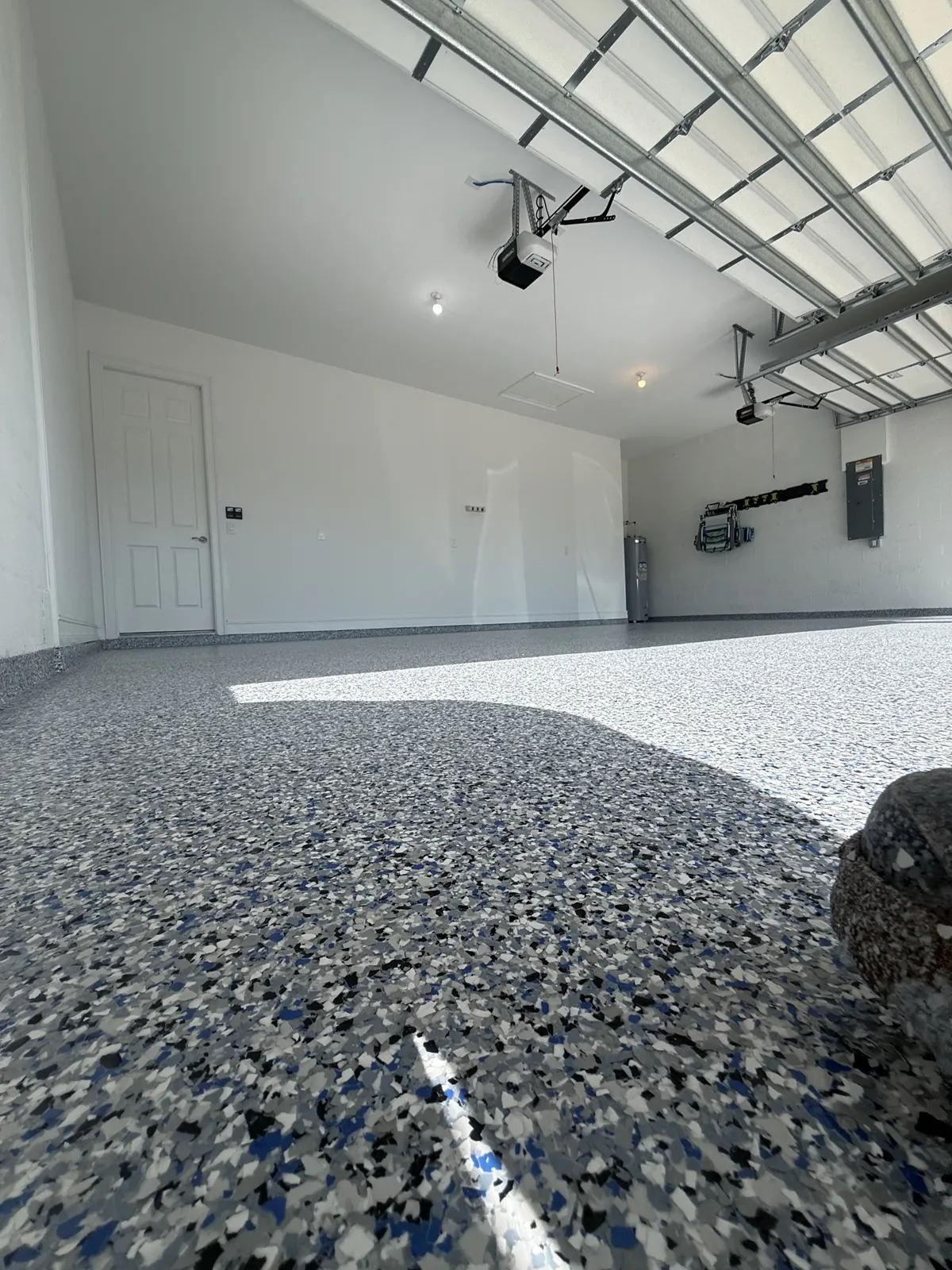
A professional system is not one product — it is diamond grinding, moisture testing, a 100% solids epoxy or MVB base, an optional decorative broadcast and a UV-stable polyaspartic topcoat. The result is 25–40 mils of bonded, seamless, chemical-resistant floor that hides cracks and patches and carries a lifetime residential warranty.
| Penetrating sealer | Acrylic sealer | Clear epoxy | Full epoxy coating | |
|---|---|---|---|---|
| Stops oil & stains | No | Partially | Yes | Yes |
| Hot tire resistant | n/a | No | Mostly | Yes (polyaspartic) |
| UV-stable | Yes | Fades | Yellows | Yes |
| Hides cracks / patches | No | No | No | Yes |
| Moisture vapor | Breathes | Blushes white | Can delaminate | MVB primer handles it |
| Lifespan in FL | 5–10 yrs | 1–3 yrs | 3–7 yrs | 15–20+ yrs |
| Installed cost / sq ft | $1–$2 | $1–$2.50 | $3–$5 | $6–$10 (flake) · $4–$7 (solid) |
When a sealer is the right call in Naples
- Driveways and pool-deck pavers where you want water and salt repellency without changing the look → penetrating sealer.
- Brand-new broom-finished concrete you plan to coat later → a breathable penetrating sealer buys time without blocking adhesion (acrylics must be ground off first).
- Interior slabs with no vehicles and a decorative finish you want to keep natural → consider polished concrete instead.
When a sealer will disappoint you
Any floor that parks cars, sees Florida sun, or has stains, cracks and patches you want gone. An acrylic or clear epoxy on a Naples garage floor is a 1–3 year product in a 20-year home.
Florida-specific: moisture is the deciding factor
High water tables push vapor up through slabs constantly. Film-forming sealers trap it and blush; thin epoxies can lift. Coating professionals test vapor emission first and specify a moisture vapor barrier primer when readings are high — the single step that makes a Florida floor last. It is also why we grind rather than etch: adhesion into open concrete beats sitting on a sealed surface every time. More in our guide to professional epoxy floor installation.
Already sealed? Here is the fix
Penetrating sealers usually come off with grinding during normal prep. Acrylic and old epoxy must be fully removed — see coating removal and surface prep. Then the coating system installs as normal, often in a single day with our polyaspartic floor coating.
See it before you decide
Upload a photo to the free AI Floor Visualizer and compare your sealed slab with a flake or metallic coating. Then price it in 30 seconds with the cost calculator, or call (239) 276-1462 for an honest answer about whether a sealer is enough for your floor.