Hot Tire Pickup: Why Cheap Epoxy Fails in Florida (And How to Prevent It)
You've probably seen it: a garage floor where the epoxy has lifted off in the exact shape of tire marks. This is hot tire pickup, and it's the #1 reason epoxy fails in Florida.
What is Hot Tire Pickup?
Hot tire pickup occurs when hot tires from a recently driven vehicle soften the epoxy coating, causing it to bond to the tire. When the tires cool, the coating pulls away from the concrete.
The result: Tire-shaped patches of missing coating, ruining your garage floor.
Why Florida is Hot Tire Pickup Central
Our Climate is Perfect for Failure
High Temperatures:
- Summer asphalt temperatures: 130-150°F
- Tire temperatures after driving: 140-170°F
- Garage floor surface: 90-100°F
The Problem: Standard epoxy softens at 140-160°F. Hot Florida tires easily exceed this temperature.
Other States Don't Have This Problem
In cooler climates, tires rarely reach the temperatures that cause pickup. Florida contractors see this failure constantly because of our extreme heat.
Which Coatings Are Vulnerable?
High Risk (Will Likely Fail):
- DIY epoxy kits from big-box stores
- Water-based epoxy
- Single-component epoxy
- Budget contractor epoxy
Medium Risk (May Fail):
- Standard two-component epoxy without topcoat
- 100% solids epoxy without polyaspartic finish
Low Risk (Resistant):
- Polyaspartic coatings
- Polyurea coatings
- 100% solids epoxy with polyaspartic topcoat
How to Prevent Hot Tire Pickup
Solution 1: Polyaspartic Topcoat (Our Recommendation)
Polyaspartic is specifically formulated to resist hot tire pickup:
Properties:
- Heat resistant to 200°F+
- Won't soften under hot tires
- Also UV-stable (won't yellow)
- Fast cure time
Cost Impact: Adds $1-2/sq ft to project Worth It: Absolutely, especially in Florida
Solution 2: Full Polyaspartic System
Some contractors offer 100% polyaspartic systems:
Pros:
- Maximum hot tire resistance
- Fastest cure time
- Excellent UV stability
Cons:
- Most expensive option
- Shorter working time for installers
- May not be necessary if epoxy base + poly top works
Solution 3: Proper Epoxy Selection
If using epoxy base coat:
Choose:
- 100% solids formulation
- Industrial-grade products
- High cross-link density
Avoid:
- Water-based products
- Thin-film systems
- Consumer-grade products
Our Hot Tire Resistant System
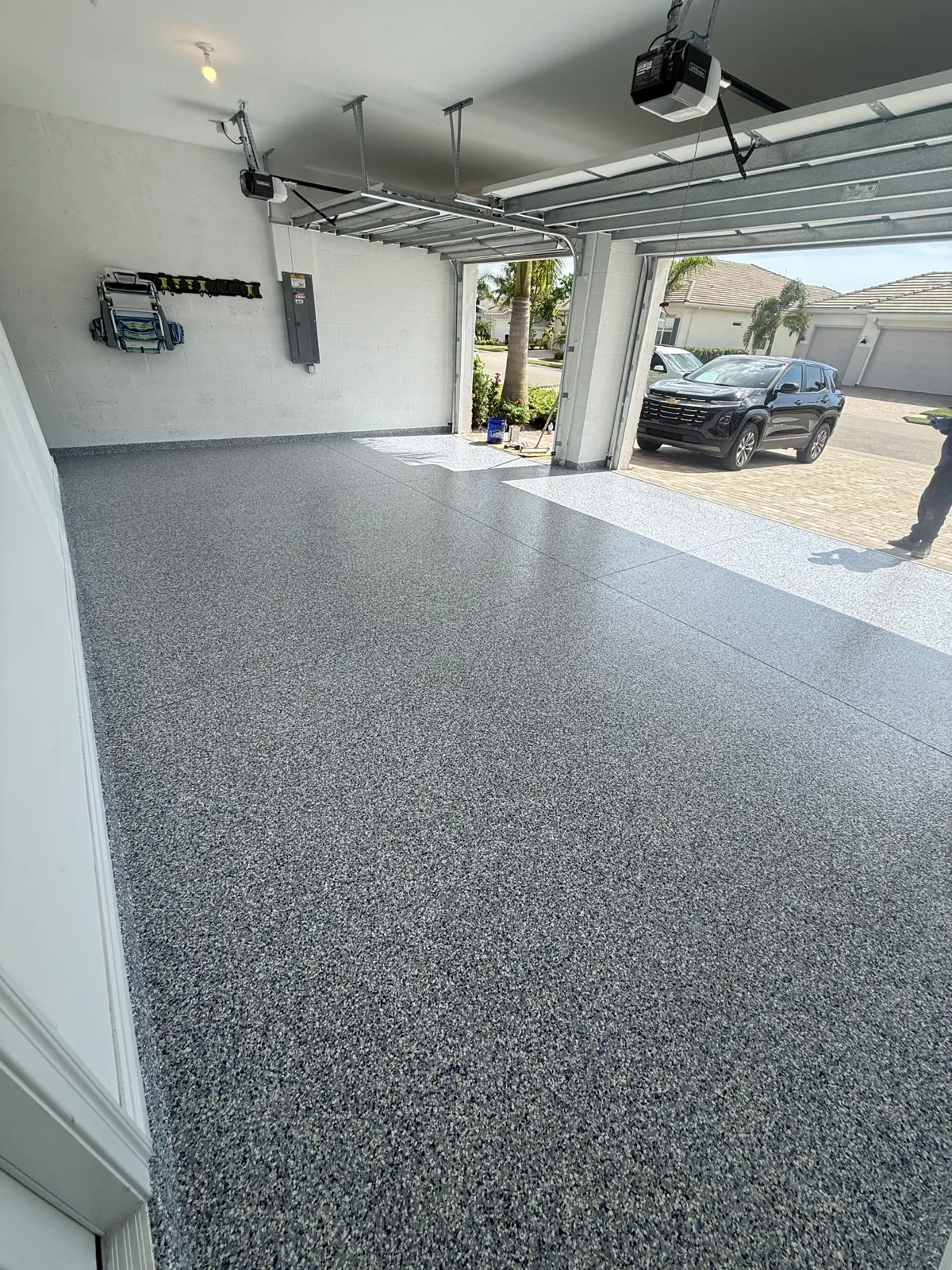
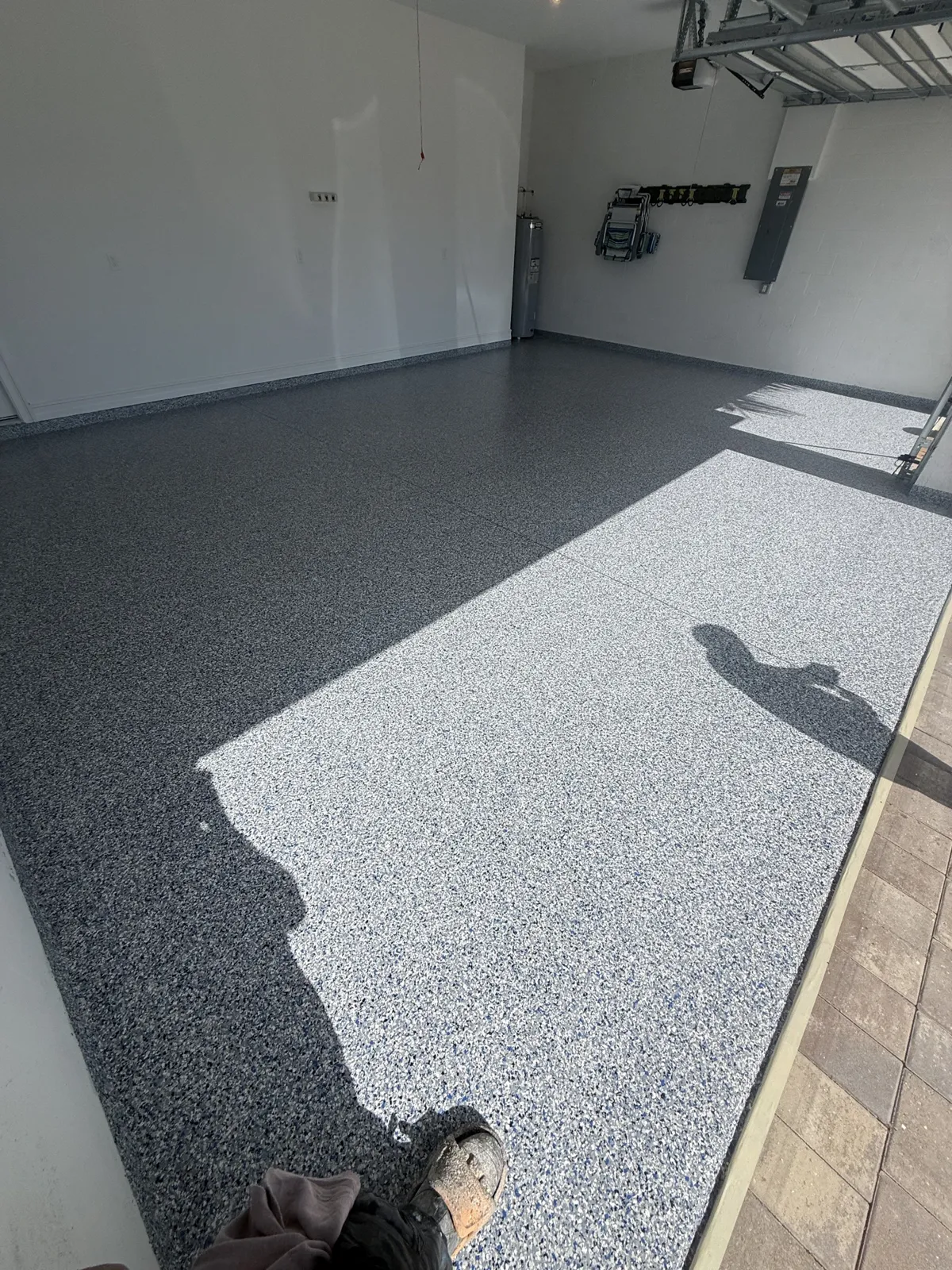
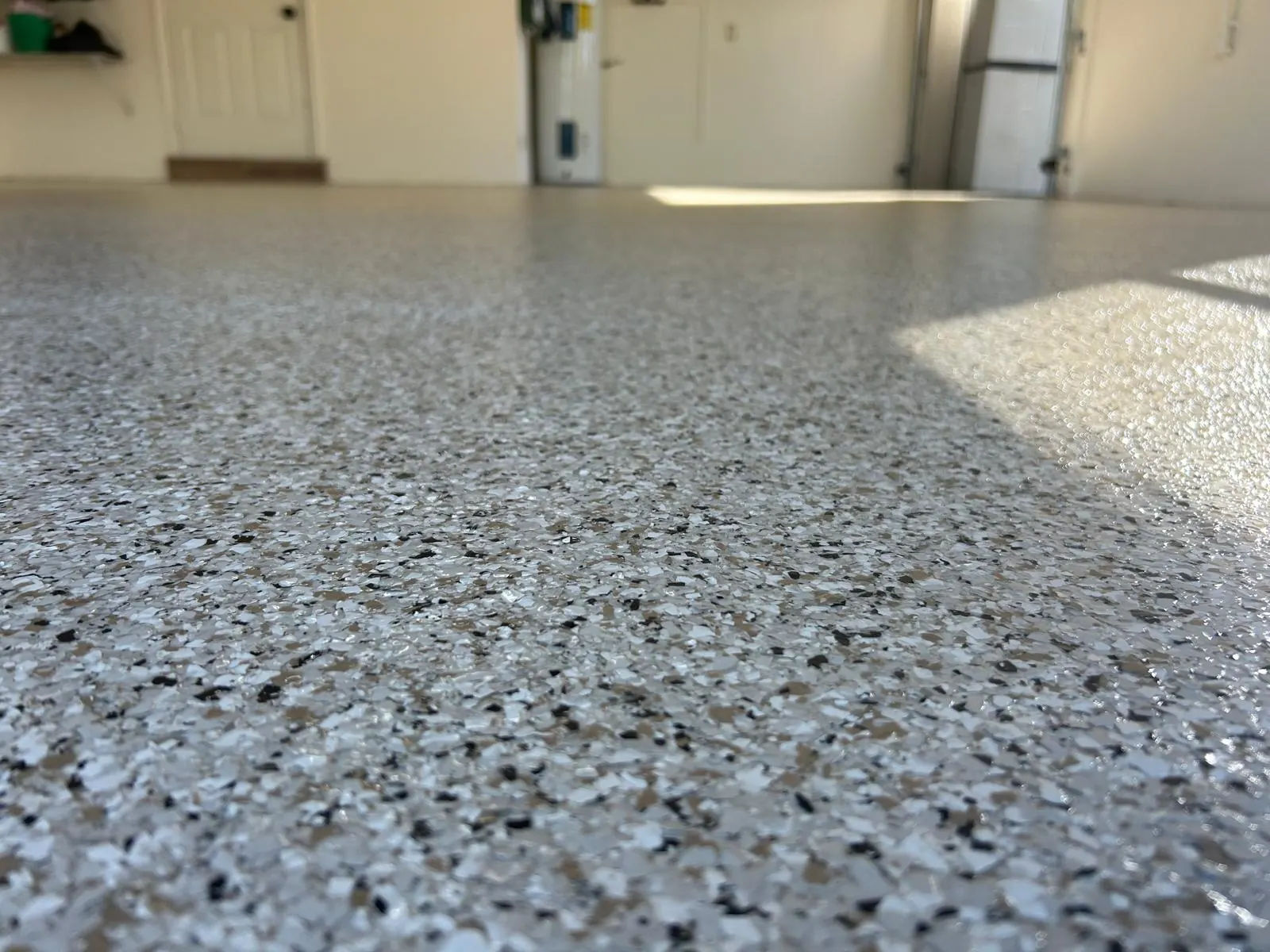
At EpoxyArt33, every garage floor installation includes:
- Diamond Grinding: CSP 2-3 profile for adhesion
- MVB Primer: Blocks Florida moisture
- 100% Solids Epoxy: Chemtec industrial base
- Polyaspartic Topcoat: Hot tire resistant finish
Result: Zero hot tire pickup issues in our installations.
What If You Already Have Hot Tire Pickup?
Minor Damage (Few Spots):
- Touch-up may be possible
- Requires adding polyaspartic layer
- Call for assessment
Major Damage (Widespread):
- Full removal and re-coat needed
- This time, do it right
- Invest in proper system
Questions to Ask Your Contractor
Before hiring anyone for your Naples garage floor:
-
"What topcoat do you use?"
- ✅ Polyaspartic or polyurea
- ❌ Epoxy only or "we'll add clear coat"
-
"Is your system hot tire resistant?"
- ✅ "Yes, rated to 200°F+"
- ❌ "It should be fine" or uncertain
-
"What's your warranty on hot tire pickup?"
- ✅ Specific warranty coverage
- ❌ No mention of this issue
Don't Learn the Hard Way
Hot tire pickup is 100% preventable with the right materials and installation. Don't gamble with a cheap coating—the cost of failure exceeds the cost of doing it right.
Ready for a garage floor that resists Florida heat? Call EpoxyArt33 at (239) 276-1462.
Published: February 2025 | Reading Time: 5 minutes