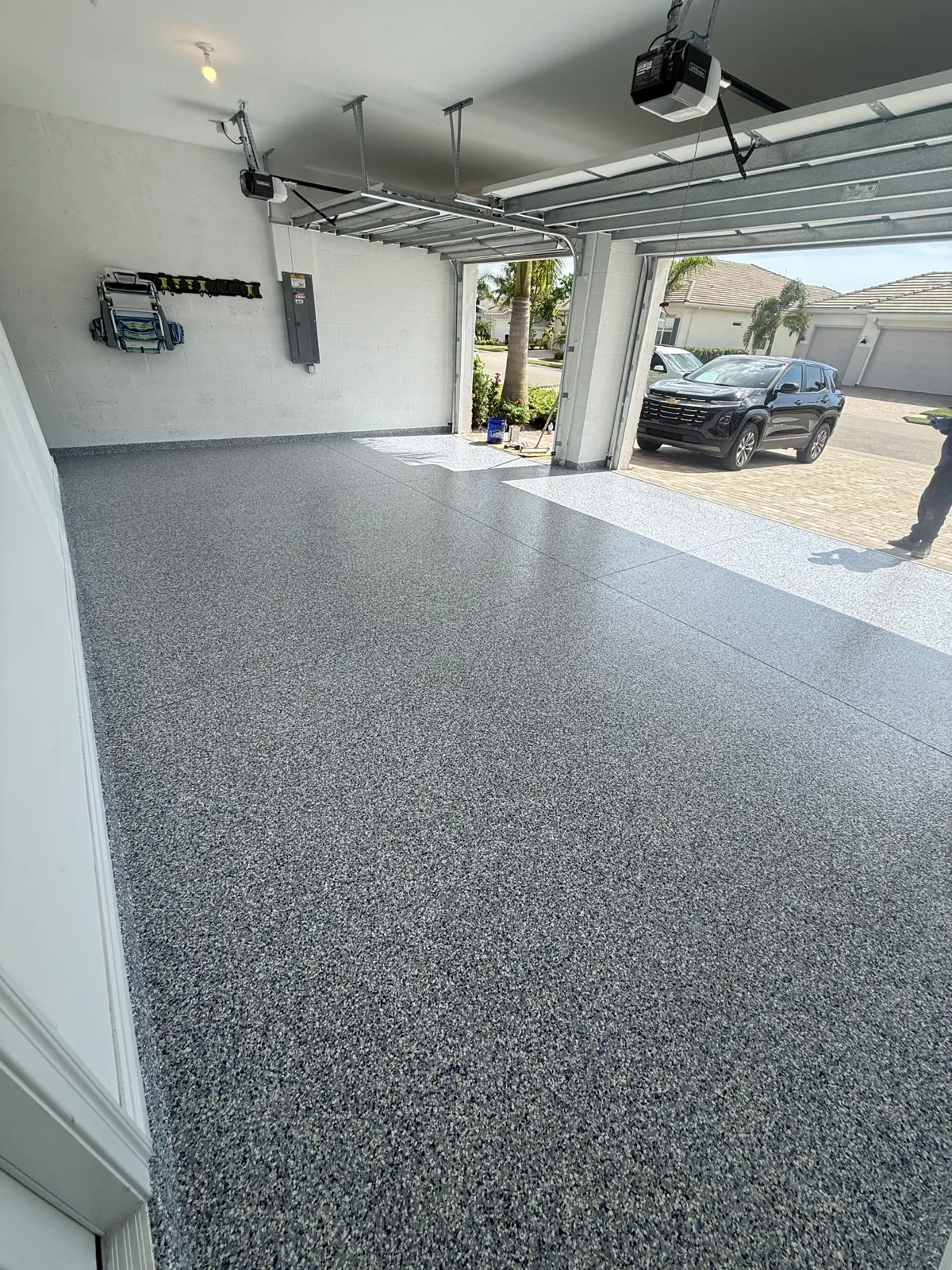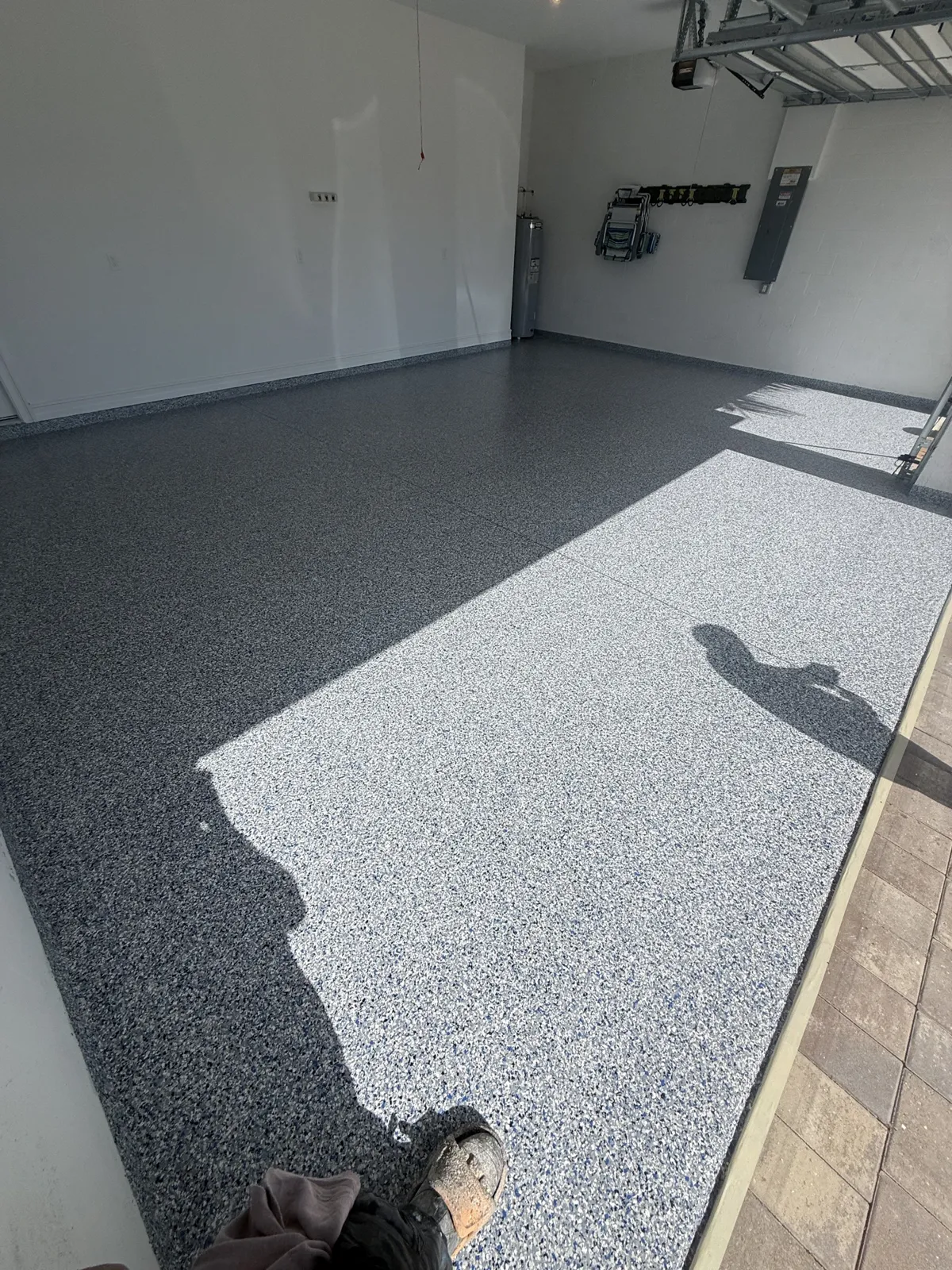
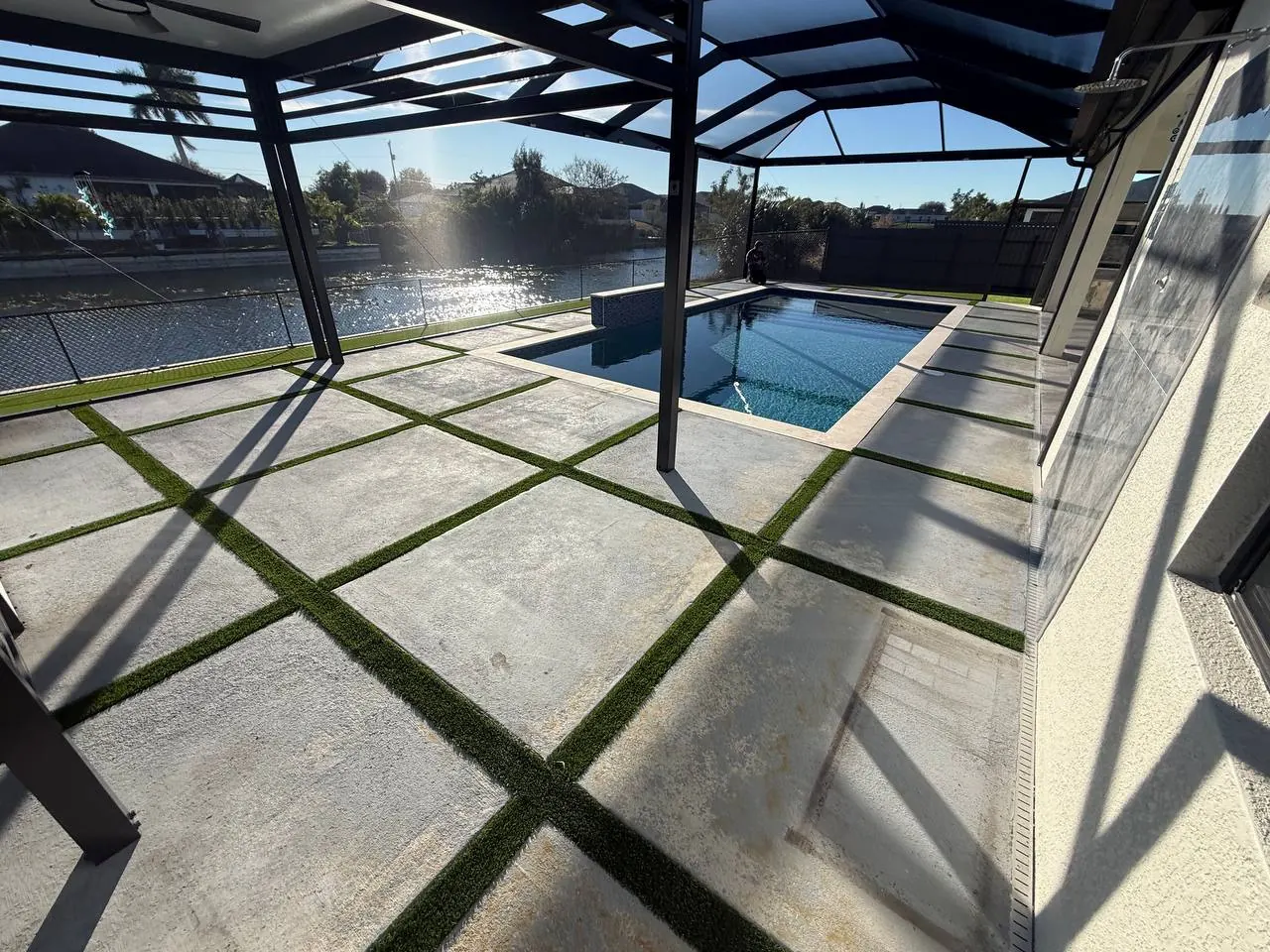
Pool Deck & Lanai Coatings in Venice, FL: Cool-Touch, Slip-Resistant, Built for Gulf Sun
Venice lives outdoors. Between the beaches, the pool, and the lanai, the concrete around a Venice home works harder than the floors inside it — and it shows. Faded gray decks that burn bare feet by noon, painted surfaces that turn into ice rinks in an afternoon storm, coatings that chalk after two summers of UV. This guide explains what actually survives here, from Venice Island to Wellen Park.
The three enemies of a Venice pool deck
1. Gulf sun. Venice decks get brutal, direct UV nearly year-round. Standard epoxy yellows and chalks outdoors — it is an indoor product being asked to do an outdoor job. Exterior decks need aliphatic, UV-stable chemistry (polyaspartic topcoats) that hold color and gloss for years, not months.
2. Water, everywhere. Daily summer storms, pool splash-out, and irrigation overspray keep Venice decks wet. Smooth sealed concrete or glossy paint becomes genuinely dangerous. Our deck systems broadcast texture into the coating itself — traction is engineered in, not sprinkled on top as an afterthought.
3. Heat underfoot. Dark or bare concrete in full sun can exceed 140°F — unusable for kids and pets. Light-reflective colors combined with textured surfaces run dramatically cooler. The cool-touch difference is the single thing Venice homeowners comment on most after an install.
What we install on Venice decks and lanais
Our pool deck resurfacing system is built in layers: repairs and crack treatment first, then a base coat bonded to diamond-ground concrete, a decorative texture broadcast (knockdown or quartz depending on the look), and a UV-stable clear wear coat rated for exterior Florida exposure.
For screened lanais we tune the same system for furniture traffic and easier cleaning; for open decks we prioritize maximum UV and salt resistance. On high-end outdoor kitchens and entertainment areas, broadcast quartz delivers the most durable, most decorative finish.
A note on pavers vs. coatings: pavers stay popular in Venice, but they shift, sprout weeds, and hold mold in the joints through our wet season. A seamless coated deck has no joints to fail and cleans with a hose — a real maintenance difference over 10 years.
Shell dust and salt: the Venice-specific detail
Venice is the Shark Tooth Capital — and all that shell and sand comes home from the beach. Shell dust is abrasive; over years it sands down soft sealers. Salt air, especially west of the Trail, attacks unsealed concrete. Both problems are solved the same way: a hard, chemically sealed wear layer that abrasion and salt cannot penetrate. That is the polyaspartic topcoat doing its job.
What it costs in Venice
Deck and lanai projects are quoted by square footage and condition. As a guide, most Venice lanai and pool deck projects land between 6 and 12 dollars per square foot installed, depending on repairs, texture choice, and deck size. Cracked or previously painted decks cost more to prep — old paint has to come off completely (see coating removal) or the new system inherits the old failure.
Venice FAQs
Do you work in Wellen Park and North Venice? Yes — all of Venice plus Nokomis, Osprey, and south Sarasota County. Start at our Venice service page.
How long before we can swim again? Most decks are walk-on in 24 hours and furniture-ready in 2-3 days. The pool stays usable for most of the project.
Will it be slippery when it rains? No — texture is broadcast into the system. We match the traction level to how you use the deck (barefoot family traffic vs. entertaining).
Is it really cooler underfoot? Yes. Light-reflective color plus texture reduces contact heat dramatically compared to bare gray concrete.
Thinking about your deck before next season? Send us photos for a free estimate — we quote fast and honestly, including what does not need to be done.